
A review on the Works of Mohammad Noureddini
Mohammad Noureddini is an artist whose practice is not built on reproducing clichés but on searching for forms, spaces, and signs that often remain unnoticed at the margins of everyday experience. His body of work spans painting, digital painting, monotype, and video art, each employing different techniques but united by a common thread: questioning what is left unseen.
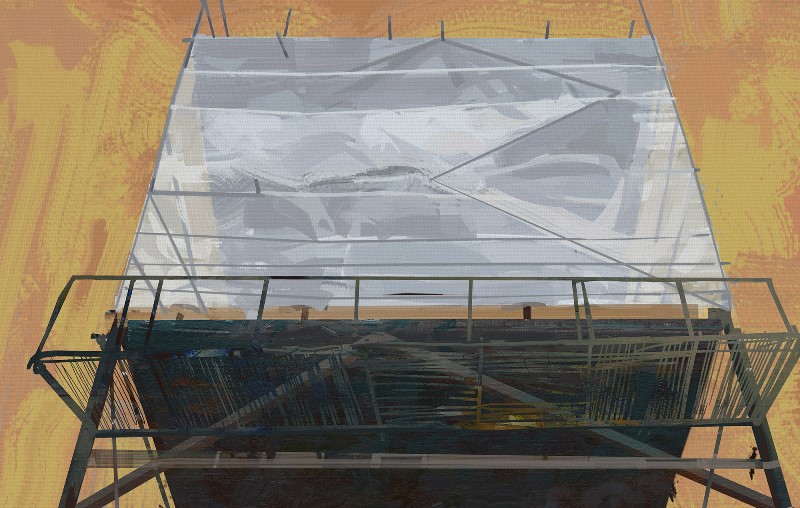
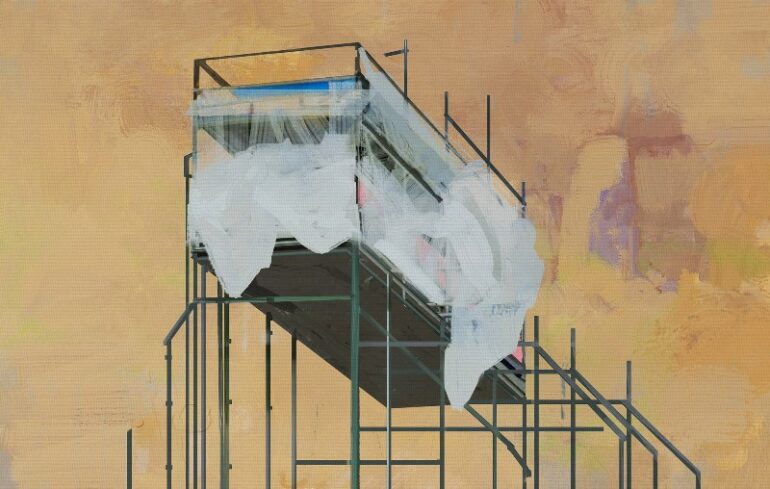
In much of his digital work, Noureddini turns to everyday waste, piles of discarded matter, and seemingly worthless layers that usally fade into the background. By uncovering hidden shapes and complex textures within these forgotten materials, he creates spaces that hover between attraction and repulsion. These works are not simply depictions of waste, but unintended reflections of contemporary culture—marked by accumulation, neglect, and excess.
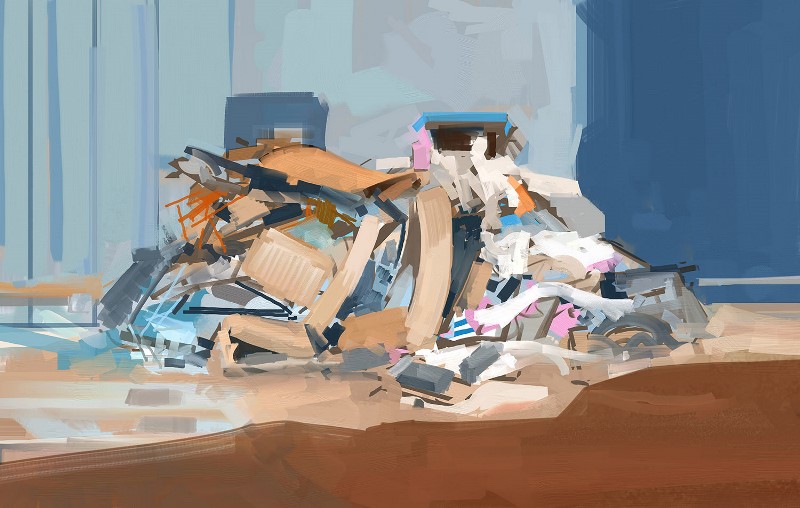
Through carefully considered lighting and composition, he builds structures that appear abstract yet carry deeper layers of social and environmental critique. This is what he also addresses in his statement: an ongoing question about what we consciously or unconsciously neglect, and the place that waste occupies not only around us but also in our minds and collective memory.
Yet Noureddini’s concerns cannot be reduced to a single framework, His landscape paintings take on a very different approach: a quieter, more intuitive encounter with vistas that dissolve into layers of color and texture. In these works, the viewer encounters not direct warning or critique, but something closer to meditation—a gaze that seeks to blur the line between human presence and the silence of nature. The contrast between these series shows how he continually moves between two poles: pollution and purity, chaos and calm, collapse and order.
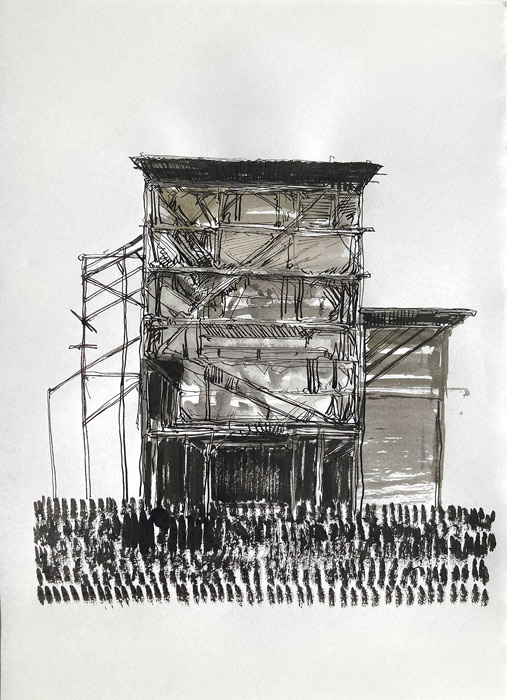
His monotypes reveal another aspect of this search. Stains, surfaces, and the accidents of print become opportunities to find beauty in error and imbalance. In these works, material itself takes on significance: the way ink meets paper, the moment an image forms while always carrying the possibility of disintegration. This balance between creation and decay connects directly to his broader concerns—the same questions that take shape differently in his digital works and landscapes.
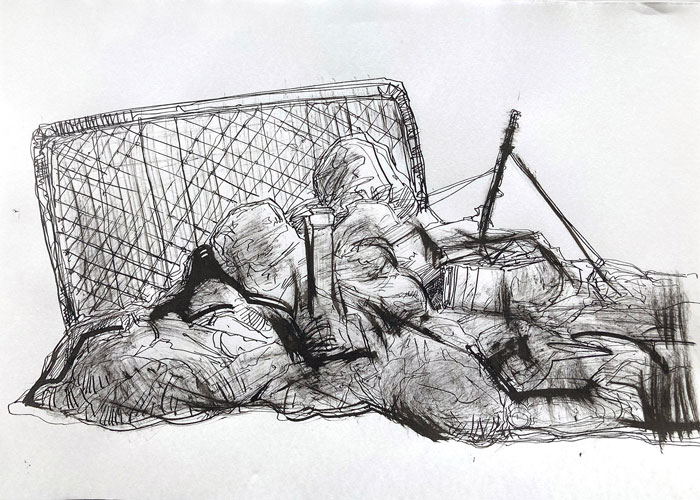
Throughout his artistic path, Noureddini has shown that technique is never the goal itself but a ground for discovery. Whether in his video arts that adds time and motion to the image, or in his digital works and monotypes, what stands out is his focus on what lies “beyond seeing”—things that usually slip into the margins through sheer familiarity. This focus takes his work beyond mere representation and turns it into an analytical, thought-provoking experience.
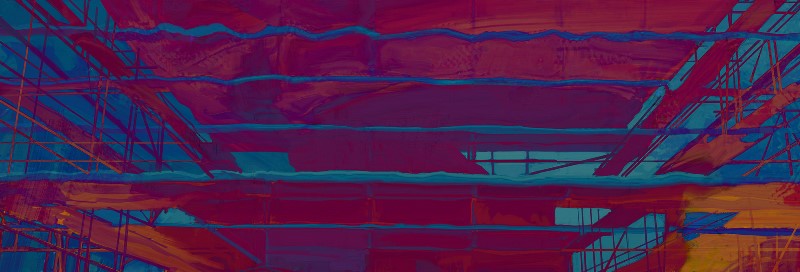
At the same time, his work matters for the way it links social critique with aesthetic experience. Even when he draws on waste, ruins or stains, he produces works that attract the eye and even deliver a sense of visual pleasure. This duality—of attraction and repulsion at once—is a defining quality of his art. The viewer, standing before these works, can neither be fully absorbed nor easily turn away, much like in daily life we cannot simply erase the role of waste or worthless structures around us.
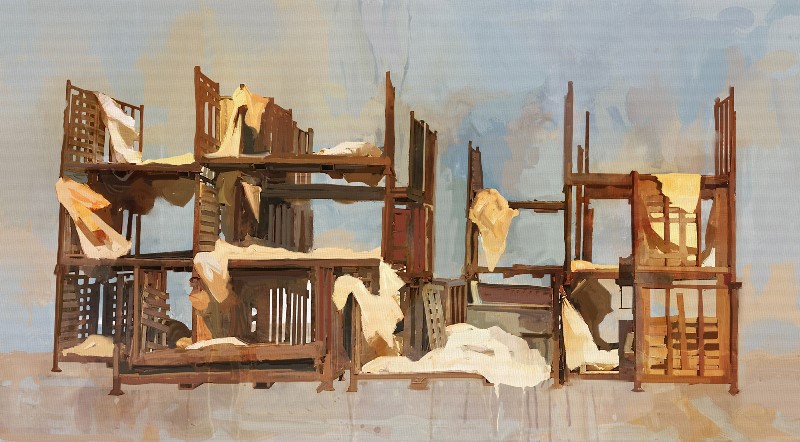
Taken as a whole, Noureddini’s practice reflects a contemporary critical gaze, but not in the language of manifestos or slogans—rather, through forms, textures, and visual experience. He shows how what seems insignificant on the surface may carry meaning on another level, waiting to be noticed. In this sense, his role as an artist is not only to create images, but to keep a question alive: What have we pushed to the margins of our lives, our surroundings, and our memory?
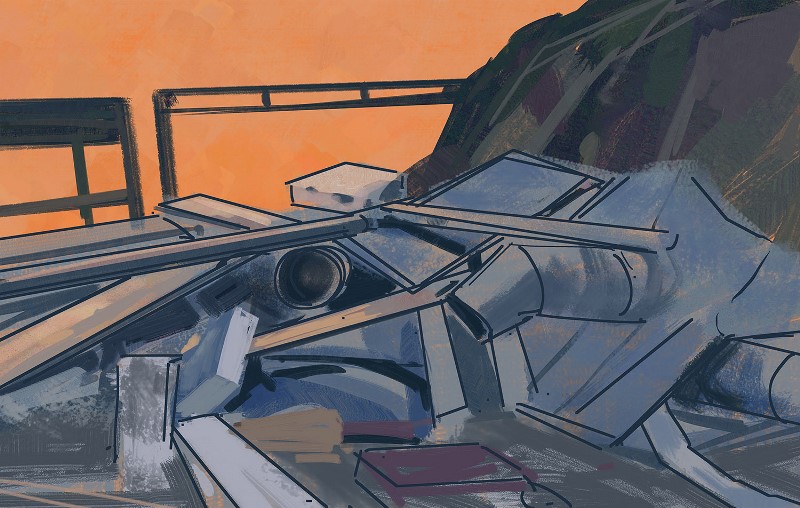
His record of work speaks to this path as well. In early 2025, Noureddini presented his solo exhibition Accidental Landscapes at Zameen Art House in Vancouver. Internationally, he served as Art Director on the award-winning short animation Tomorrow, which received “Best Animation” at the Brooklyn and Foyle Film Festivals. His projects and collaborations have also been featured by international outlets including BBC Persian and the Omeleto platform—evidence that his artistic vision has reached beyond geographical borders and found resonance with a global audience.