
Ali Miremadi’s works are deeply connected to his personal background and lived experience. As an artist who has spent years in Kashan, he looks at architecture from within, not as an observer
From a phenomenological point of view, Miremadi’s spaces exist in a state of suspension. They are not fully abandoned nor truly inhabited. This unresolved condition produces a sense of pause and hesitation: the eye lingers, unsure whether to enter, pass through, or remain at a distance. Architecture here is not experienced as an object to be read or decoded, but as a lived condition—one that unfolds through bodily perception, spatial awareness, and the quiet tension of being held between continuity and disappearance.
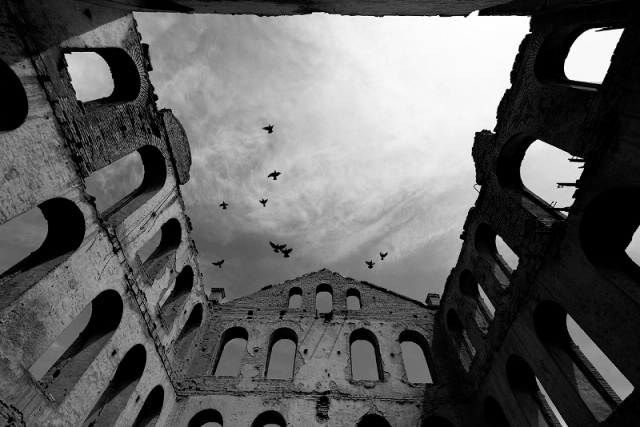
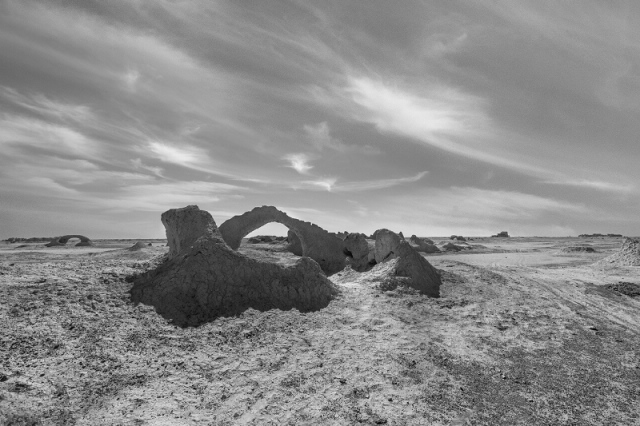
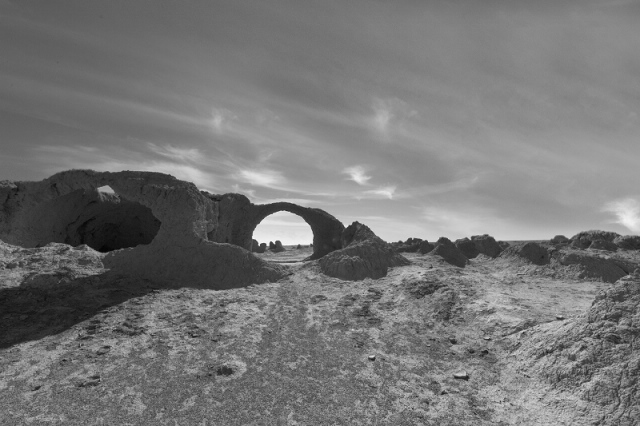
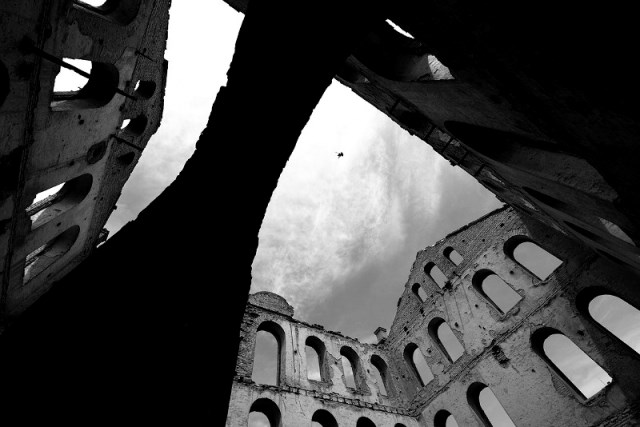
In this collection, before facing destruction, we met a kind of silence. A silence that is neither empty nor meaningless; but carries something that has been lost in time. the buildings show many signs of their broken connection from life. The buildings are time-worn and collapsed but they are still standing. This persistence, more than a sign of durability is a reminder of a history that has been forgotten.
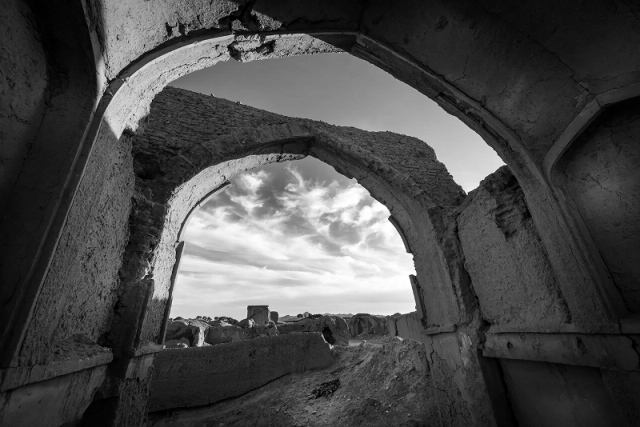
What holds the audience’s glance at the very beginning is the visual quality of these frames. Instead of highlighting the moment of collapse, the photographs focus on a gradual process, one in which destruction becomes normalized and part of landscape by time. This destruction is not sudden. It happens slowly and quietly, like a plant whose roots begin to fail somewhere out of sight.
In the absence of humans, the spaces do not feel empty. As long as, traces of human presence remain in every frame. The buildings were once part of daily life, collective memory, and meaningful structures of a society. Now what remains is a thin layer that still holds signs of life, but no longer gives meaning in.
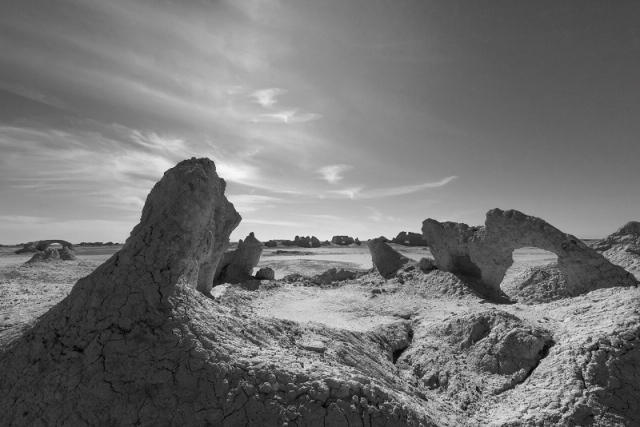
With his deep environmental concerns, the artist has recorded the building as a piece of earth, that humans have caused countless damage to it over time in pursuit of their ideals. The framing throughout the collection often directs the gaze from interior to exterior. Reflecting the way Iranian architectures appropriated an interior space. Arches and openings lead toward the sky, and broken walls dissolve in the horizon. This visual orientation does not create a sense of simple expectation or hope, but rather imposes a moment of stillness. The lights emphasizes textures and erosions, making the silence of the space more deeply.
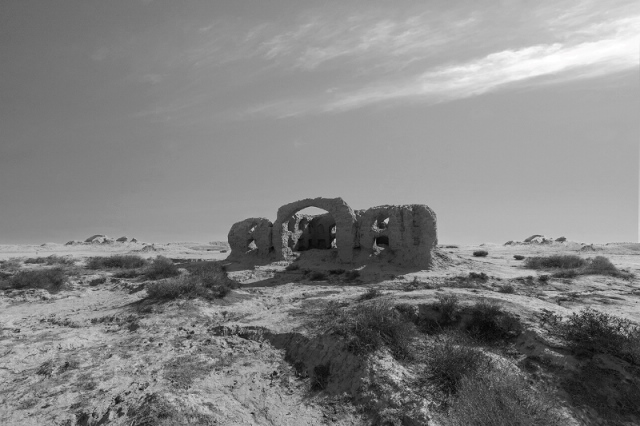
The structures in these frames are not presented as memories of the past, and even not historical records. They are more remains of bodies that have lost their language of speech, but they are still readable trough surface and texture. They show themselves and also leave space for thinking.
What sets this collection apart from many similar projects is its focus on a moment that is often overlooked; the moment that everything has not collapsed yet, but the possibility of continuity has disappeared. These images keep us right there. Before the final collapse, before complete disappearance, in a moment when we can still see, read and ask.
In conclusion, this series is more about erosion of collective memory than architectural destruction. Architecture here becomes a root that, if it becomes empty of life, will certainly collapse. even if the building remains standing for a while.
by: Mehrnoush Zamanian